

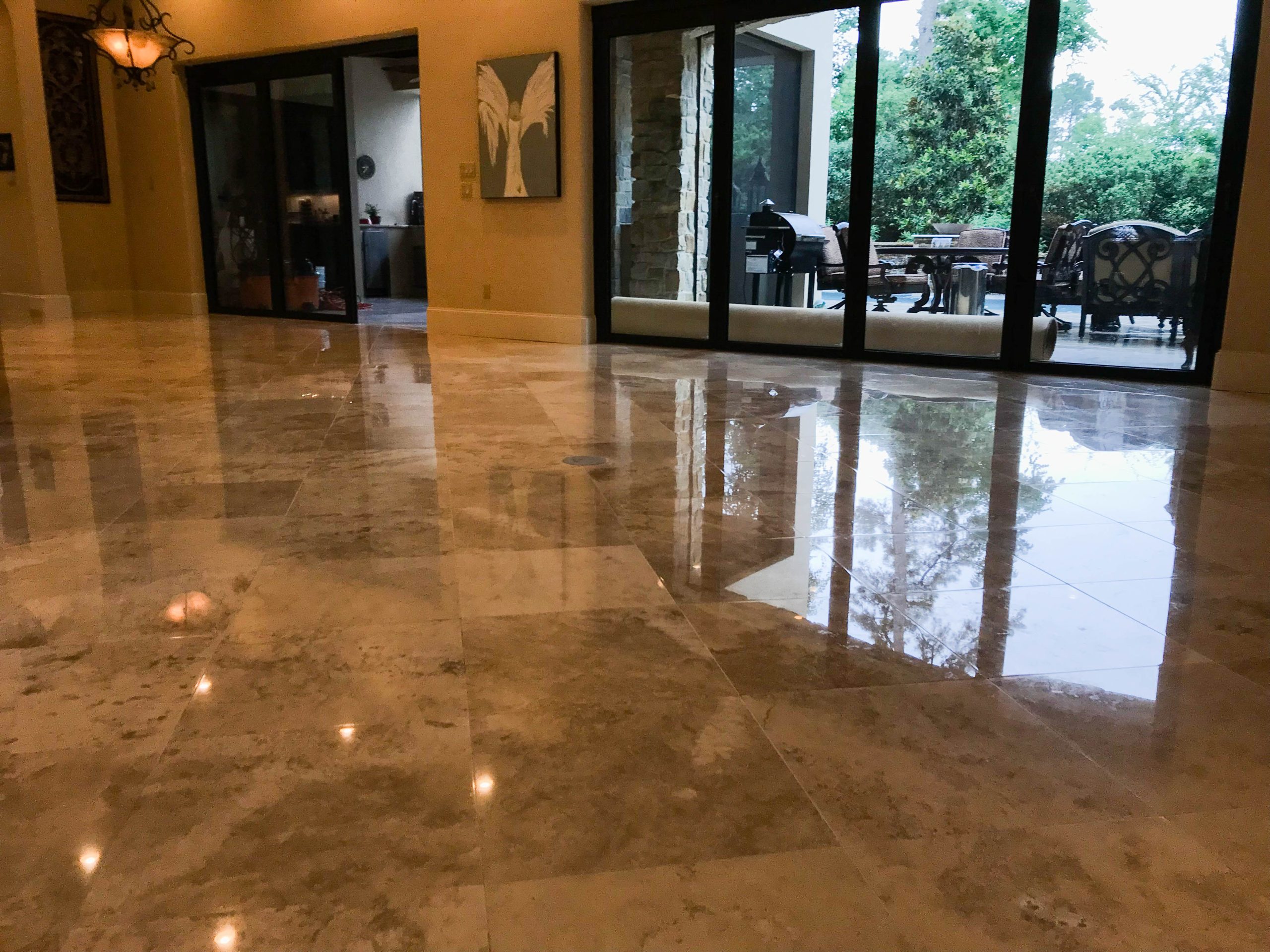
How is travertine formed and why does this matter?
To properly take care of your travertine you must know how it is formed. Travertine is a form of limestone (a sedimentary rock) that is formed through the precipitation of calcium carbonate minerals along with others. This often occurs in hot springs or in limestone caves. The reason this is important is because the calcium carbonate in the stone is very reactive to acid. Cleaning your travertine with an acidic cleaner will “etch” or eat away the top layer of the stone leaving it white or hazy. To remove this etch you must sand the travertine down to match the depth of the etch. It is recommended that you contact your local stone professional regarding travertine restoration.
What do I clean my travertine with?
We recommend using a residue free neutral stone cleaner to clean your travertine. This is because most alkaline cleaners (pH over 7) leave behind a soapy residue, which over time will make your stone even dirtier. An acidic cleaner (pH under 7), as we have already discussed, will etch your stone. Be sure to check the bottle and make sure it says “residue free”. What good is it to clean your stone and leave behind a soap film or some of the dye or fragrance that they put in the cleaner. This residue will build up over time leaving your stone dull and dirty.
What do I fill the holes in my travertine with?
Travertine comes in many different types of cuts and finishes. But for todays discussion we will keep it as simple as possible. You can have “filled travertine” or “unfilled travertine”. This simply means when you buy the travertine are all the holes filled or not. If the holes are filled this doesn’t mean you won’t have new holes pop up in the future. These new holes can be caused by the constant abrasion of foot traffic, high impact or focused points of pressure like high heels or roller blades. See our travertine restoration case study. To fill these holes we recommend using Tenax travertine fill, which is a two part kit (the filler and the hardener). If you have “unfilled travertine” your best option is to grout the holes. Make sure the grout color is a lighter color or this can make your travertine look dirty. This will let you maintain the natural look of your floors, but also clog some of those holes where dirt doesn’t fill them instead. You can find out more about travertine hole repair in our YouTube video below.
If you also have tiled areas, periodic tile and grout cleaning by professionals will keep those surfaces just as pristine as your travertine.